

In the Age of AI, All We Have Left Is Taste
On keeping wonder alive in a frictionless world

The title of this post isn’t original. I’ve seen it before. But lately, I’ve been reflecting on my own role in this space, specifically as it relates to Miscellaneous Good.
I spend my days as a VC meeting with “cracked” founders and reviewing pitch decks for Vertical AI companies. The future everyone’s building is one where machines do everything faster, cheaper, and more personalized. To be clear: I’m entirely bullish on all of this, and I feel lucky every single day that my job puts me in rooms with people who are rewriting what’s possible.
And yet.
I sit down at night and write on Miscellaneous Good. I share my personal travel stories with a community of people who keep reading them. I recommend hotels because I bought their linen sheets after. Bars because they felt like a real-life set of Lost in Translation. Neighborhoods because there’s a rare bookshop on the corner where the owner will talk to you about his upbringing for an hour if you let him.
No aggregated data. No algorithmic optimization.
The contrast isn’t lost on me. Part of me wonders why I keep writing travel recommendations when AI can instantly synthesize thousands of reviews, optimize for preferences, and generate a perfect itinerary in seconds.
I keep coming back to two key themes: taste and the irreplaceable intimacy of human creators.
Taste
Taste is about finding beauty in the unexpected. It’s the accumulation of every experience you’ve had, every value you hold, every inexplicable preference that makes you you. You trust another human’s recommendation because you recognize something of yourself in how they see the world, in their taste.
AI, on the other hand, doesn’t take risks. It has analyzed your entire being and distilled you into a particular archetype. The recommendations it spits out are just a mirror.
Data-driven systems can’t recommend a Georgian restaurant with weird hours and no online presence, even if it changed how one particular person thinks about food for the rest of their life. AI gives you exactly what you want. But in doing so, you never get what you didn’t know you needed.
AI gives you exactly what you want. But in doing so, you never get what you didn’t know you needed.
When a friend who spends Saturdays hunting through record bins tells you about a tiny café in Lisbon where the owner plays vinyl every Tuesday afternoon, they’re offering you a glimpse through their particular lens. You trust them not because their recommendation is objectively correct, but because their eye for the worth-seeking-out resonates with something in you.


Human recommendations, according to that logic, are not comprehensive or unbiased. They favor certain things and overlook others. In doing so, they create meaning. And taste, unlike information, is what transforms a trip from a series of verified Google pins into something that expands who you are.
The Irreplaceable Intimacy of Human Creators
Human recommendations create intimacy. It can be as direct as a friend sending you a picture of the Mousse au Chocolat you told them to get: proof that yes, it really is THAT good. In that moment, you’re connected.
Or it can be more layered.
Intimacy deepens when something you’ve noticed becomes a window into another person. Art provides a powerful illustration of this.
Take, for example, a work by the artist, Vincent Van Gogh. Throughout his life, Van Gogh struggled with severe mental illness, marked by episodes of psychosis, depression, and profound isolation that would ultimately define both his existence and his art. In The Starry Night, the paint is thick, almost violent. The sky writhes with an almost hallucinatory intensity. In December 1888, Van Gogh cut off part of his left ear. A week later, he painted a self-portrait with a bandaged ear on his right side, leaving viewers imagining as he painted himself in a mirror. These details are what make the work so fascinating, and Vincent Van Gogh one of the greatest artists of all time. As a viewer, you think beyond the canvas itself. You’re witnessing one human being’s attempt to externalize his own mind. This is a deeply human connection.
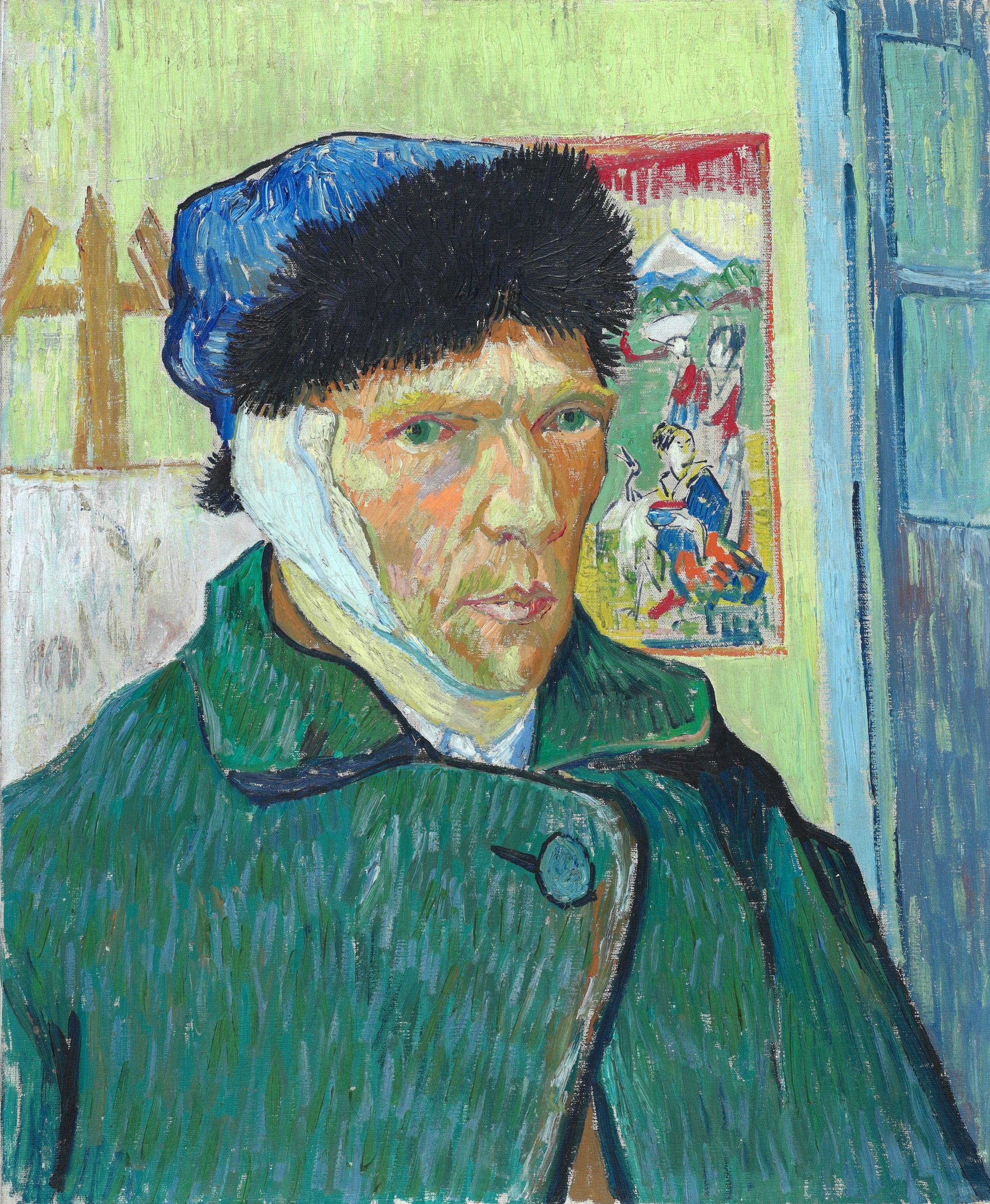
If AI generated a Van Gogh, it would mean nothing. It might be a technically fascinating work of art, but there would be no person behind it to understand and no moment of shared humanity. Creation without a creator is hollow. It’s the difference between receiving a perfectly optimized restaurant recommendation and having a friend grab your arm and say, “You have to try this.” One is information; the other is someone letting you into their world.


Why I Keep Writing
At the end of the day, I love sharing on Miscellaneous Good because it takes me back to some of the best moments of my life and lets me daydream about future ones. It connects me to people through the things we find beautiful and keeps the practice of wandering and discovering alive.
If there’s one function left for humans in the age of AI, it’s this: to be admirers of subjectivity, and keepers of curiosity and wonder.
If you read Miscellaneous Good, I guess we’re united in that.
Amazing and important post. Also LOVE THIS - "AI gives you exactly what you want. But in doing so, you never get what you didn’t know you needed."
AI could never replace my Uma